In 2026, generative AI in animation and video production has moved well beyond the “useful production aid” stage. It is now transitioning into a production infrastructure — one driven by major streaming platforms, studios, and cloud infrastructure companies.
The moves by Amazon MGM Studios, AWS, Netflix, and Chinese AI video models are not simply more examples of AI adoption. They represent a structural transformation of the entertainment industry — a fundamental redesign of how content is conceived, produced, rights-managed, distributed, and monetized.
This article breaks down Amazon’s and Netflix’s generative AI strategies, the rise of Chinese video AI models, the lessons from the AI dubbing backlash, and four concrete things Japanese companies, production studios, and AI creators should be testing right now.
The Bottom Line
The competition in AI animation is no longer purely about which model renders the most beautiful footage. What matters now is how you embed generative AI across the entire production system — and how you manage quality, rights, and reproducibility at scale.
Table of Contents
Why Amazon and Netflix Are Moving Now — AI Animation Shifts from Experiment to Industrial Strategy
To be direct: Amazon and Netflix are no longer treating AI as a purely exploratory technology. Both companies have moved to build organizational structures where AI sits at the center of their production pipelines. Reading these as isolated news stories misses the point. What’s happening is the convergence of four strategic levers — streaming, cloud, production, and IP — into a single, integrated play.
Until recently, generative AI video was largely the domain of independent creators and small studios experimenting with emerging tools. The entry of Prime Video and Netflix changes the category. Generative AI is no longer something production teams “try out” — it is becoming something that fundamentally changes how they operate.
From AI Creators’ perspective, this matters enormously. AI video production cannot be reduced to prompt engineering or tool selection. It only becomes a viable production practice when it spans the full workflow: concept, IP, reference materials, voice, music, editing, rights clearance, and post-release performance analysis. Amazon and Netflix are pointing exactly in that direction.
What Is Amazon MGM Studios and AWS’s “GenAI Creators’ Fund”?

Amazon MGM Studios and AWS have announced the “GenAI Creators’ Fund” — a generative AI animation initiative under which three animated series for Prime Video have been greenlit. The projects are “Cupcake & Friends,” “Love, Diana Music Hunters,” and “Punky Duck.”
According to reports, “Cupcake & Friends” is being produced by BuzzFeed Studios, “Love, Diana Music Hunters” is from creator Albie Hecht, and “Punky Duck” is from Jorge R. Gutierrez, the director behind “The Book of Life.” What’s significant here is not just that Amazon is making AI-assisted animation — it’s that the company is offering a model that bundles funding with a full production environment.
This initiative is designed not merely as tool access but as an end-to-end system: production, distribution, and cloud infrastructure delivered together. It signals that generative AI in video is no longer a single-output problem — it is a workflow architecture problem.
Source: Amazon MGM Studios, AWS Launch the GenAI Creators Fund|TV Technology
Project Nara Is Not an AI Video Model — It’s a Production Workspace
The technical backbone of the GenAI Creators’ Fund is “Project Nara.” It is not an AI video model in the conventional sense. Reports describe it as a production workspace — an environment that connects creators, AI models, production processes, and cloud infrastructure into a single managed system.
According to coverage, Project Nara is built on AWS and integrates with professional tools already in use across the industry: Maya, Blender, Nuke, Unreal Engine, and Adobe Creative Cloud. In other words, the intent is not to replace existing production tools with AI — it is to connect them through AI and manage the entire pipeline from within that environment.
Some reports indicate that Project Nara is designed to combine multiple external AI models with proprietary models. Given that descriptions vary across sources, this article characterizes it as an integrated workspace that orchestrates external models and production tools rather than specifying individual model names.
For AI creators, the strategic takeaway is clear: “which model is best” is no longer the only question that matters. How you design the full production flow — and who makes decisions at each stage — is becoming the real competitive axis.
Source: Amazon MGM Studios, AWS Launch the GenAI Creators Fund|TV Technology
Netflix’s INKubator / INK and What “Institutionalizing AI Production” Really Means
A note of caution on Netflix: the company has not issued a formal, large-scale public announcement. However, multiple media outlets have reported — based on LinkedIn profiles and job listings — that Netflix has been quietly building a generative AI animation team known as “INKubator” or “INK.”
Reports suggest INKubator is structured as a “GenAI-native” animation studio, starting with short-form animated content and specials, with longer-form ambitions potentially to follow. Serrena Iyer is reported to be playing a central role. This should be treated as information drawn from job postings and industry reporting — not a formal Netflix press release.
What matters strategically is the implication: Netflix appears to be integrating generative AI not just into post-production efficiency, but into the upstream stages of development — short-form creation, concept validation, and world-building. AI production is beginning to look less like an experiment and more like an institutionalized practice.
Source: Netflix is building an AI animation studio|The Verge
What the Streamers Are Really After — Not Content, but the “Production OS”
If you read Amazon’s and Netflix’s moves simply as “big streamers making AI animation,” you’re missing the deeper play. What both companies are positioning for is not content — it’s a layer above content: the Production OS of the entertainment industry.
The Production OS, as we use the term here, refers to the full stack of rules, tools, cloud infrastructure, rights management, quality control, and distribution that underlies how content gets made. When generative AI enters the picture, a single key visual, a character design, a voice recording, or a reference clip becomes connected to multiple AI generation stages across the pipeline.
This creates an entirely new design challenge: which assets go in, which AI models handle them, where do humans review and revise, and where does final approval happen? The streamers are not just producing AI content. They are racing to define the standard for how AI-era production flows are structured.
Amazon’s Play: Connecting AI Content to AWS Production Infrastructure
Amazon’s ambition extends well beyond Prime Video’s animation slate. By building a production environment like Project Nara on AWS, Amazon is creating a pathway where content creation and cloud infrastructure converge — a structure in which production workflows run on Amazon’s own systems.
Video production is becoming increasingly data-intensive. High-resolution imagery, multi-track audio, 3D assets, motion data, editorial timelines, rights metadata — the volume of production data keeps growing. Add generative AI, and you layer on top of that: model processing, version control, prompt histories, and reference asset management.
Amazon’s move into AI animation can be read as a content play — but also as a move to pull professional creative workflows into the AWS ecosystem. The entity that controls the production infrastructure gains meaningful influence over how production costs are structured and how workflows evolve.
Source: Amazon MGM Studios and AWS Launch GenAI Creators Fund|Variety
Netflix’s Play: AI Integration Beyond Post-Production, Into Development
To understand Netflix’s strategy fully, you need to consider the InterPositive acquisition alongside the INKubator reports. In March 2026, Netflix officially announced the acquisition of InterPositive, a film production technology company co-founded by Ben Affleck. The purchase price was not disclosed publicly.
According to Netflix’s official statement, InterPositive develops AI-assisted tools built for filmmakers — systems trained on actual production footage to support editing consistency, lighting correction, missing shot completion, and visual coherence across a production.
This move signals that Netflix sees AI not as a video generation shortcut, but as a technology that supports the entire production process. If InterPositive handles post-production and production support, and INKubator (per reporting) addresses short-form creation and concept validation, then Netflix appears to be assembling capabilities that span from upstream development all the way through to delivery.
Netflix has also published a generative AI usage guideline for production partners. It specifies that intended GenAI use should be disclosed to the relevant Netflix team, and that cases involving personal data, talent likeness or voice, third-party IP, or final deliverables require careful review and approval.
This is not a company treating AI as a sandbox. Netflix is beginning to manage AI as a controlled production practice.
Source: Why InterPositive Is Joining Netflix|Netflix
Source: Using Generative AI in Content Production|Netflix Partner Help Center
What “Human-Led, AI-Supported” Actually Means
When Amazon and Netflix discuss AI, both companies consistently use language that frames human creativity as central, with AI in a supporting role. This reflects genuine respect for creators and audiences — but it is also a carefully calibrated risk-management position.
The 2023 WGA and SAG-AFTRA strikes made generative AI a central labor issue in Hollywood. WGA secured AI-related protections in its 2023 contract, and SAG-AFTRA has published AI-specific resources covering how actors’ likenesses, voices, and performances may be used.
“Human-led” is not a PR phrase. It is a design principle — one that determines where in the production process human judgment is required. The question is no longer whether to use AI. The question is which workflows AI may enter, with whose consent, to what quality standard, and for what purpose.
Source: Artificial Intelligence|Writers Guild of America West
Source: Artificial Intelligence Resources|SAG-AFTRA
The Rise of Chinese AI Video Models — How Seedance, Kling, and Hailuo Are Reshaping Production
While Amazon and Netflix dominate the headlines, another force is reshaping entertainment production at the ground level: Chinese AI video models. ByteDance’s Seedance, Kuaishou’s Kling, and MiniMax’s Hailuo have become significant players in the field — advancing rapidly across video generation, character consistency, reference-based control, and audio synchronization.
What distinguishes Chinese AI video models is not just visual spectacle. It’s that they are closing the gap with actual creator workflows. We’ve moved past “text-to-video as a novelty.” These models now accept combinations of images, video clips, audio, character references, and motion references as inputs — which is exactly how professional production works.
That said, high capability and commercial safety are separate issues. Anyone using Chinese AI tools in a commercial context needs to scrutinize terms of service, training data practices, output ownership, data handling, and the evolving landscape of international regulatory risk.
Seedance 2.0: Beyond Video, Into Audio, Reference Control, and Editorial Direction
ByteDance’s Seedance 2.0 is a strong indicator of where AI video generation is heading. The ByteDance Seed official page describes Seedance 2.0 as an integrated multimodal audio-video generation architecture supporting text, image, audio, and video input.
The official blog elaborates that the model can process multiple images, video clips, audio tracks, and natural language instructions as simultaneous inputs. This marks a clear evolution: AI video is no longer just about generating footage from a text prompt. It is becoming a production experience that encompasses reference assets, audio, staging direction, and editorial control.
From AI Creators’ perspective, the critical insight here is what this means for the creator’s role. Prompt engineering, while still relevant, is no longer the whole job. The more consequential skill is reference design — deciding which images anchor the visual identity, which audio defines the tone, which clip defines the motion, which elements are fixed and which are delegated to the model. That is where creative direction now lives.
Source: Seedance 2.0|ByteDance Seed
Source: Official Launch of Seedance 2.0|ByteDance Seed Blog
Kling: Evaluating It Through Character Consistency and Commercial Viability
Kling deserves to be assessed not as a flashy AI video novelty, but in terms of character consistency and real-world production usability. On AI Creators, our coverage of Kling Motion Control 3.0 has focused on its use of multiple reference inputs to improve facial consistency and motion coherence across shots.
Character consistency is one of the hardest unsolved problems in AI video production. Generating a single beautiful shot is achievable. Maintaining the same character across multiple angles, expressions, and camera moves — without visual drift — is where most models still fall short.
That is precisely why models like Kling attract serious attention. For brand campaigns, character IP, animated series, and advertising, visual reproducibility matters more than one-off aesthetics. Before AI video can enter professional production workflows, it has to demonstrate control, not just capability.


Commercial Risk When Using Hailuo and Other Chinese AI Tools
The intellectual property risks surrounding Chinese AI video models are not hypothetical. Reuters has reported that Walt Disney, Comcast’s Universal, and Warner Bros. Discovery have filed copyright lawsuits against China’s MiniMax and its AI image and video generation system, Hailuo. In May 2026, Reuters further reported that MiniMax’s motion to dismiss the Disney lawsuit had been denied.
This is not a Hailuo-specific issue. As AI video models become more capable, so does their ability to generate footage resembling existing characters, brand assets, and intellectual property. That versatility is powerful — and commercially dangerous.
- Data management risk: You need to understand how input materials, prompts, and outputs are stored and whether they may be used for model training.
- IP and copyright risk: You need to verify that generated output does not substantially resemble existing characters, brands, or copyrighted works.
- Regulatory and contractual risk: You need to confirm that your use of the tool complies with the platform’s terms of service, client contracts, and applicable local regulations.
Our position at AI Creators is not that Chinese AI tools should be avoided. The position is that before using any of them commercially, you must resolve questions around rights, source materials, contracts, and data retention.
Source: Disney, Universal, Warner Bros Discovery sue China’s MiniMax for copyright infringement|Reuters
Source: China’s MiniMax loses bid to end Disney copyright lawsuit over AI system|Reuters
Why Success Stories Aren’t Enough — What the AI Dubbing Controversy Revealed
Looking only at success stories in generative AI production is a mistake. The failures teach more. The AI dubbing backlash is a case study in why quality, consent, transparency, and professional respect are not optional — they are prerequisites for AI content to be socially accepted.
Audiences don’t object to AI simply because AI was used. In most cases, the anger reflects something deeper: a suspicion that human expression was treated as expendable, that voice actors and rights holders weren’t consulted, that the work wasn’t taken seriously. The technology is not the problem. The disrespect that technology can enable — that is.
AI production is a domain where technical feasibility and cultural acceptance do not automatically align. That gap cannot be closed by better models alone.
What Actually Happened with Amazon’s AI Dubbing Problem
Amazon Prime Video faced significant criticism over AI-generated dubbing. GamesRadar reported that several anime titles on Prime Video were found to carry dubs labeled “English [AI beta],” and that some of those AI dubs were subsequently removed. Titles cited in reports include “Banana Fish,” “No Game, No Life Zero,” and “Pet.”
The problem was not purely about output quality. According to reporting, rights holders and studios associated with some of the affected titles indicated they had not been informed of or approved the use of AI dubbing — a claim that extended concern well beyond the viewing audience into the professional community.
Dubbing touches voice performance, emotional delivery, and the audience’s relationship with characters. When AI dubbing misses the mark — whether in technical quality or tonal fidelity — viewers do not experience it as a neutral efficiency measure. They experience it as the work being treated as less than it deserves.
For any organization considering AI dubbing or AI voice applications, quality review is not sufficient on its own. Consent, clear labeling, and alignment with rights holders and production partners are essential — particularly for established titles and beloved IP, where fan expectations are unforgiving.
Source: After more AI English anime dubs were removed from Prime Video|GamesRadar+
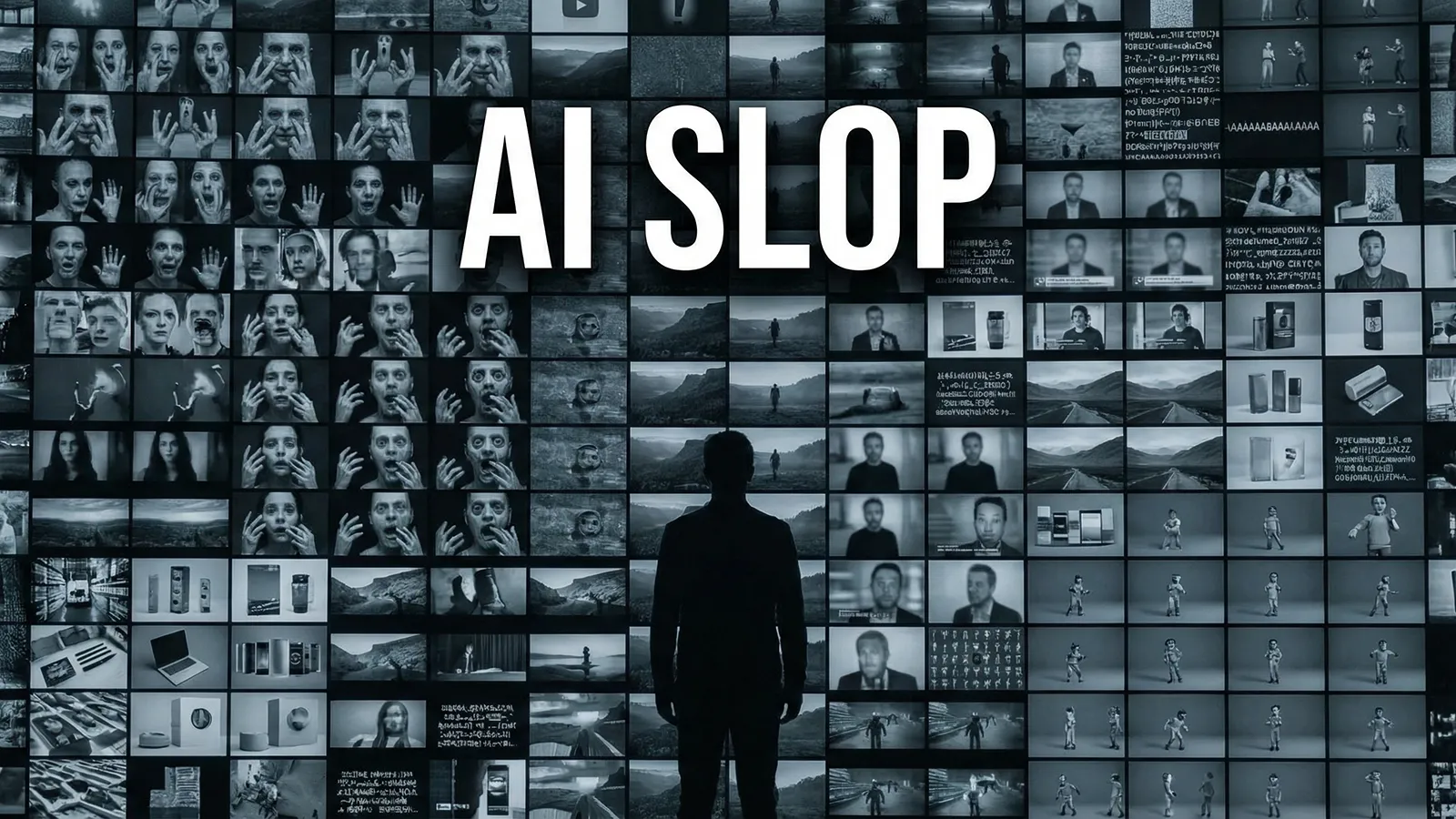
Three Conditions Required to Avoid Being Called “AI Slop”
In international discourse, “AI slop” has become shorthand for low-quality, mass-produced AI content that feels disposable and disrespectful of the medium. Avoiding that label requires meeting three conditions — none of which are purely technical.
- Quality: The footage must be structurally coherent. Voice and performance must feel intentional. The editorial rhythm must work as content — not as a test render.
- Consent: The rights status of every input element — people, voices, characters, music, branded assets — must be confirmed before production begins.
- Purpose: AI must be used for a reason that goes beyond cost reduction — expanding creative range, accelerating prototyping, unlocking production options that weren’t previously viable. The intent must be legible.
The verdict on AI use is never simply “you used AI.” It is always which workflow, with whose consent, to what standard, and to what end. That is a question of production ethics and decision architecture — not tooling.

How the AI Creator’s Role Is Changing — From Prompt Craftsperson to Production Architect
This is where AI Creators’ editorial position matters most. Generative AI’s evolution is unquestionably changing what it means to be an AI creator. But that change is not simply “some jobs will disappear.” The more accurate framing is this: the value of people who can determine what to create with AI, design how to create it, and decide where human judgment is required — that value is rising.
AI creators have often been characterized as people who excel at prompting — generating high-quality images or video through careful input engineering. In commercial production contexts, that is a starting point, not a complete skill set. What clients and studios increasingly need is someone who can design the entire production.
AI Creators’ position is that the AI creator’s role is shifting from “generator” to production architect. Knowing the tools is the baseline. What differentiates is the ability to design intent, structure, operations, and risk management across the full production lifecycle.
What’s Needed Now: Not “Can Generate” but “Can Design Production”
The most common misconception in AI video production is that generating one excellent shot is enough to build a practice. Output quality matters — but in commercial contexts, the ability to produce the right footage reliably and repeatedly is worth more than a single stunning result.
Consider a brand promotional video featuring a proprietary character. A single strong shot is not a deliverable. The character needs to hold up from multiple angles, with changing expressions, in motion, synchronized with audio, maintaining brand tone across every format — social, vertical short, web, event screen.
That requires more than prompts. It requires character documentation, reference asset design, shot structure, editorial guidelines, and revision protocols. The AI creator who is ready for commercial work is not the one who operates generation tools. It is the one who understands the production objective, determines where AI belongs in the workflow, and ensures the outcome is delivery-ready.
Three Capabilities Clients and Studios Are Looking For
In AI production practice, the capabilities that matter most resolve into three areas.
- Creative Direction: The ability to define what needs to be created and to evaluate AI output against a clear creative intent. This means designing the content’s purpose before writing a single prompt.
- Production System Design: The ability to build workflows that are repeatable. Not a beautiful one-off image, but a pipeline that can produce series-ready, scalable content.
- Risk and Rights Management: The ability to integrate asset clearance, output rights, voice and music licensing, and reputational risk assessment into the planning stage — not as an afterthought.
As Netflix’s generative AI guidelines make clear, commercial production with GenAI requires that intended use be shared with stakeholders and that risk be actively evaluated. Creative excellence and accountability are not competing values — in this environment, they are inseparable.
Source: Using Generative AI in Content Production|Netflix Partner Help Center
AI Expands Perception and Editorial Judgment — It Doesn’t Replace Them
The real nature of AI animation is not the substitution of hand-drawn craft. It is something more interesting: the rapid visualization of possibilities that a human creator could not have surveyed manually — followed by a human choosing which of those possibilities carries meaning.
Generative AI tools produce enormous volumes of “almost-something.” Most of it won’t become content. But somewhere in that output, occasionally, there’s a frame, a motion, a composition that makes you stop and say — that’s it. And the ability to recognize that moment is not a function of the model. It is a function of the person watching.
What AI-era creators need, more than generation skill, is the ability to identify “what could become work” from an overwhelming volume of machine output — and to embed that editorial judgment into a repeatable production system. That is not prompt craftsmanship. It is the perspective of an editor or director. And it cannot be automated.
What Companies, Studios, and AI Creators in Japan Should Verify Right Now
For Japanese companies, production studios, and AI creators, the right first move is not launching an ambitious AI animation project. It is running small, deliberate validations to identify what a viable AI production flow actually looks like for your specific context.
Generative AI is not a plug-in solution that immediately increases production efficiency. Without preparation, common failure modes include inconsistent output, unresolved rights questions, no viable revision path, and workflows that only one person can reproduce.
If your organization is beginning to explore AI video production, start with a short-form proof of concept — something in the 15-to-60-second range. Even at that scale, running the full loop — concept, reference design, generation, editing, audio, quality review, publication, performance analysis — will surface exactly where your gaps are.
Validation 1: Run a Full Production Loop with a 15- to 60-Second PoC
Don’t start with a feature-length ambition. Begin with a short-form proof of concept and complete every stage of the production process: concept development, storyboarding, reference asset selection, generation, editing, audio, subtitles, publication, and post-release analysis.
Even a 15-second brand clip will expose the issues that matter: Can you maintain consistent character appearance? Does camera movement land as intended? Does audio sync with footage? Can you act on revision notes? Are there any rights concerns in the input materials?
The goal of a short-form PoC is not to produce a polished deliverable — though that matters too. The goal is to identify which stages consume the most time, which stages require human judgment, and which elements can be templatized and reused across future projects.
Validation 2: Run a Character Consistency Test with Your Own IP
For organizations with proprietary characters or brand IPs, one of the most important early tests is consistency across shots. Can you maintain facial features, costume, voice, world design, and camera style across multiple cuts?
For character-driven IP — whether animation, brand mascots, or game characters — what matters is not a single beautiful frame but series viability. The same character needs to hold up across social posts, promotional video, vertical format, web content, and live event material. If the character drifts between executions, the brand breaks down.
If you’re using AI video models with reference input capability — such as Kling or Seedance 2.0 — don’t rely on the model to make these decisions. Define your own rules: which visual elements are non-negotiable, and which can be interpreted freely by the system.
Validation 3: Establish Rights and Asset Management Rules Before Production Begins
In commercial production, rights management is not a post-production task — it is a pre-production requirement. Before a single frame is generated, you need clear answers: whose image is being used, whose voice, which music, which reference clips, and whether you have the rights to use all of them in the way you intend.
The elements that require the most scrutiny are people, voices, existing characters, branded assets, and music. AI tools generate new output from input materials — but having the output does not mean you had the rights to use the inputs. In addition, some platforms may retain or train on uploaded materials; that question should be resolved at the contract stage, not after delivery.
A 15-minute rights review before production starts can prevent months of legal exposure after it ends. In AI production, preparation before generation is what determines quality and legal safety.
Validation 4: Build an Editorial Layer — Never Deliver Raw AI Output
AI-generated footage is source material. It is not a finished deliverable. Treating it as one is among the most common and costly mistakes in AI production today. Raw output frequently contains visual inconsistencies, audio misalignments, subtitle errors, brand tone drift, and unresolved rights questions — none of which a model will flag for you.
Making AI output commercially viable requires a dedicated human editorial layer: video editing, audio treatment, color grading, subtitling, narration, rights confirmation, and quality sign-off. These are not optional. They are the production steps that transform AI output into content that can be published and stand behind.
A budget allocation that invests heavily in generation and cuts corners on finishing is a budget that compromises both quality and trust. AI-era production teams need a defined collaboration structure between generation leads, editors, directors, and rights reviewers.
Conclusion — The AI Animation Competition Has Moved from Model Performance to Production System Design
Looking across Amazon’s, Netflix’s, and China’s AI video model developments, a common structural pattern emerges. The competition in AI animation is no longer decided by which model renders the most visually striking footage. It is decided by how you integrate generative AI into a production system that encompasses concept, execution, rights management, distribution, and monetization.
Amazon MGM Studios and AWS’s GenAI Creators’ Fund, Project Nara, Netflix’s acquisition of InterPositive, the INKubator reports, Netflix’s generative AI production guidelines, ByteDance’s Seedance 2.0, Kling’s character consistency advances, and the copyright litigation around Hailuo — these are not unrelated developments. They share a single underlying story: generative AI is beginning to restructure the production architecture of the entertainment industry itself.
Which of these approaches will prevail? That remains genuinely uncertain. What is no longer uncertain is this: the gap between organizations that use AI occasionally and organizations that have embedded AI into their production design is becoming harder to close.
For Japanese companies — and any studio navigating the same AI production shift — the answer is not to chase every new tool. It is to develop the AI-native production design capability that fits your IP, your workflows, and your team. Not by copying someone else’s success story — but by testing your own flow, making your own judgments, and building your own system. That iterative practice is the only durable competitive advantage available now.