

As generative AI reshapes creative work across images, video, music, writing, 3D, and code, simply knowing how to use a tool is no longer enough to stand out. What is gaining value now is the ability to decide what should be made, how it should be built, and how that work should connect to real outcomes.
At AI Creators, we use the term AI Creator to describe practitioners who work across structural design, production, development, implementation, and validation. In other words, an AI Creator is not just a prompt operator or a tool user. It is a role that sits at the intersection of creativity, systems thinking, and execution.
At a high level, the path to becoming an AI Creator can be organized into four core steps:
- Build your working environment
- Focus on one or two core areas
- Connect planning with production
- Build real-world experience
This guide explains what AI Creators actually do, what skills the field demands, how to enter it without prior experience, what the market looks like, and what kind of practitioner the AI-native era is increasingly beginning to reward.
Table of Contents
What Is an AI Creator?
The term “AI Creator” is now used in many different ways. For some people, it refers to anyone generating images or video with AI. For others, it means a creative professional using AI in content, marketing, or production workflows.
As generative AI becomes more widely accessible, however, simple output generation is becoming less of a differentiator. What matters more is the ability to turn AI into part of a repeatable creative and business process.
At AI Creators, we define the role in a more integrated way:
An AI Creator is a practitioner who works across structural design, production, development, implementation, and validation—someone who can design both creative value and business outcomes at the same time.
This is not just someone who executes instructions, and it is not just someone who speaks in abstractions. An AI Creator moves across expression, technology, operations, and evaluation—integrating generative AI into a broader creative system rather than treating it as a standalone tool.
- An AI Creator is not simply someone who generates images. They are a practitioner who can connect planning, production, implementation, and validation to outcomes.
- The role now spans advertising, video, IP development, social media, education, research, and enterprise AI implementation.
- It is possible to enter the field from a beginner level, but progress depends on more than tool operation alone. Research, planning, editing, workflow design, and rights awareness all matter.
- As the generative AI market expands, so do the career formats around it—from full-time roles and project-based work to training, education, and implementation support.
AI Operator vs. AI Creator
These roles can look similar from the outside, but they are not the same.
| Category | AI Operator | AI Creator |
|---|---|---|
| Primary role | Produces requested outputs | Helps define what should be made in the first place |
| Source of value | Tool operation and output speed | Integrated planning, production, implementation, and improvement |
| Scope | Single deliverables | Operations, brand consistency, systems, and outcomes |
| Competitive environment | More vulnerable to price competition | More differentiated through upstream thinking and implementation |
| Long-term value | More easily automated | Grows with structural understanding and execution ability |
In the generative AI era, work centered only on producing outputs is increasingly likely to become automated or commoditized. The more durable question is whether someone can use AI to design systems for solving creative and business problems.
What Does an AI Creator Actually Do?
Advertising and Marketing
In advertising and marketing, AI Creators are no longer limited to producing banners, social assets, or short videos. More often, they are involved from the planning stage onward—helping shape creative directions, scale content production, and maintain brand consistency across campaigns.
Video, Animation, and Entertainment
In video and animation, AI is being applied to concept art, previs, music videos, short-form animation, promo content, and stylistic experimentation. Here, the role is not just about generating visuals, but about connecting intent, style, editing, and final delivery.
Games, IP, and Character Development
In games and IP work, AI can support character ideation, worldbuilding, key visuals, design sheets, and promotional assets. In this context, what matters is not just a visually striking output, but a world or character system that can remain coherent over time.
Media, Publishing, and Social Content
Across media and social platforms, there is growing demand for AI-assisted article visuals, video content, serial concepts, thumbnails, and editorial production. Here, the key is not just making assets, but understanding what to create, for whom, and through which channel.
Education, Training, Research, and Prototyping
In educational and research contexts, AI Creators may work on training materials, experimental workflows, pilot projects, and implementation case design. Their role extends beyond production into explanation, testing, and structured application.
Enterprise AI Adoption and Internal Enablement
This is one of the most important areas going forward. Many organizations are not only looking to increase output speed and volume, but to build creative systems that allow smaller teams to produce high-quality work more consistently.
That requires more than production skill. It calls for workflow design, tool selection, role distribution, quality control, and validation structures.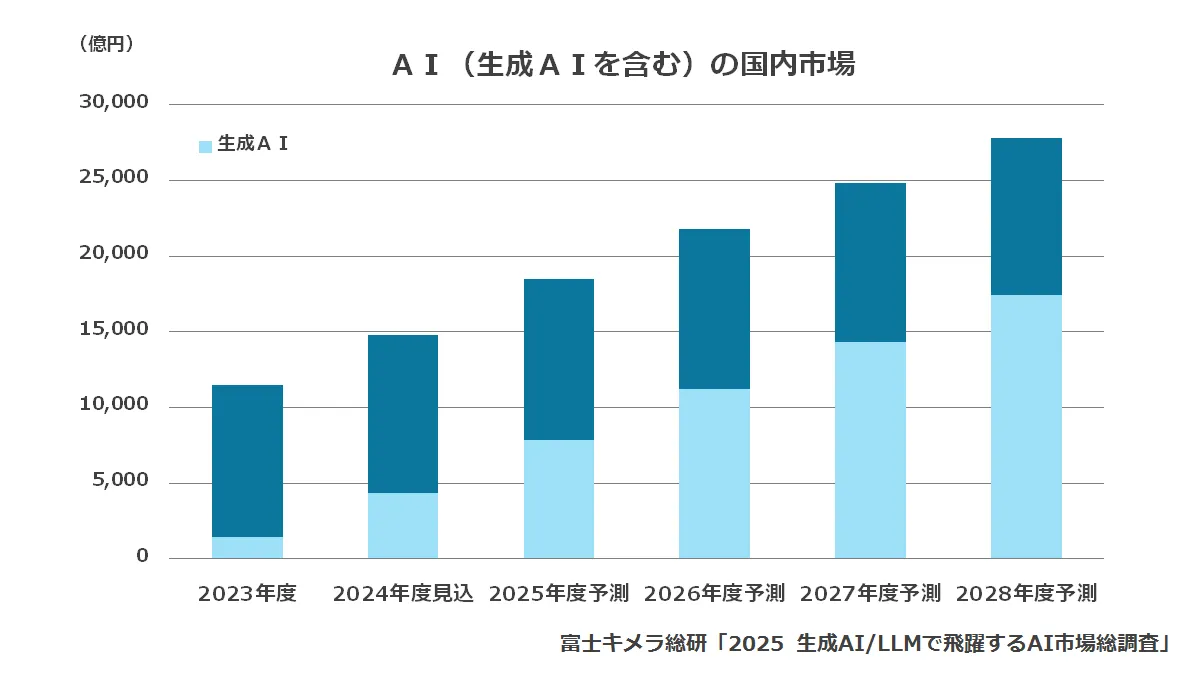
Core Skills an AI Creator Needs
An AI Creator needs much more than tool literacy. The role sits at the intersection of market understanding, expression, technology, operations, and validation.
1. Research Ability
Strong outputs begin with strong research and testing. Here, research does not simply mean gathering information. It means understanding the market, creative trends, technical developments, and tool landscape relevant to a project—then testing what is actually usable in practice.
2. Planning Ability and Marketing Understanding
Turning information into meaningful concepts is a major source of value. AI Creators need to understand audiences, brand context, and platform logic in order to design what kind of content should be made, how it should be framed, and where it should go.
Large language models can now support research synthesis, angle generation, structural planning, and message comparison at speed. That makes it important to use LLMs not just as writing tools, but as thinking tools that support planning and marketing judgment.
3. Expression Design and Editorial Judgment
AI can produce a large number of outputs, but selecting, shaping, and refining those outputs still depends heavily on human judgment. Maintaining tone, consistency, and finish quality remains a core skill.
4. Tool Orchestration and Integration
Different tools are strong in different areas. For example, ChatGPT or Claude may support planning and writing, Midjourney or Stable Diffusion-based tools may support image work, and video generation tools may support motion-based production.
The key is not deciding which single tool is “best.” It is developing the ability to combine multiple tools based on budget, purpose, speed, and quality requirements.
5. Workflow Design and Implementation Understanding
An AI Creator is not just someone who creates one-off outputs. They need to think in terms of repeatable production systems—what should be automated, what should remain human-led, and how a workflow can be made sustainable.
6. Validation and Improvement
AI creative work does not end when something is generated. It requires comparison, testing, and refinement. That means identifying which patterns perform, which steps are inefficient, and which outputs are closest to the real objective.
7. Rights, Ethics, and Transparency
Any serious engagement with enterprise or public-facing implementation requires an understanding of copyright, terms of use, likeness, transparency, and safety. This is not only about defense. The ability to recommend safer models and more reliable workflows is itself a form of value.
How to Become an AI Creator Without Prior Experience

You do not need to begin as a fully formed generalist. A more realistic path is to start from an existing strength, then expand into adjacent capabilities.
There Are Two Main Paths: Build on an Existing Strength or Start from Scratch
The path into AI creation is not singular. If you already have a strength in design, writing, video, direction, development, marketing, or operations, you can increase your value by combining that strength with AI. If you are starting from scratch, you can still enter through planning, direction, marketing thinking, or workflow support.
Your First 90 Days
At the beginning, it is better to go deep in one or two domains than to touch many tools superficially. You need to understand what each tool can and cannot do, and what kind of work you actually want to pursue.
In practical terms, it is usually more realistic to begin with cloud-based tools rather than investing heavily in local environments right away. Depending on the combination of tools you use, it may be possible to begin experimenting from a relatively small monthly budget, then expand your setup once your direction becomes clearer.
At the same time, it is important to study real-world examples and observe what kinds of styles, formats, and use cases the market is actually responding to.
The Kind of Portfolio You Should Build Within Six Months
A portfolio should not simply be a gallery of visually appealing outputs. It should communicate what problem you were addressing, what decisions you made, what tools and process you used, and how you improved the result.
Examples might include a social content system for a fictional brand, a unified visual direction across multiple assets, a video-and-still concept set, or a proposal built around workflow improvement rather than aesthetics alone.
The Limits of Self-Study and the Value of Practice Communities
It is possible to improve on your own, but the pace of change in generative AI is fast, and most real work is not done in isolation. One common trap for beginners is becoming overly focused on tools, features, and updates themselves rather than learning how to produce stable outcomes.
In real projects, knowing the newest tool matters less than being able to build a process that works consistently.
For Beginners, a Generative AI Creative School Can Be a Useful Entry Point
Going directly from zero to professional-level execution is not easy. That is why AI Creators offers a Generative AI Creative School for beginners. The official page outlines learning support that spans fundamentals to practice, along with individual counseling, online sessions and seminars, and follow-up support. It also indicates that beginners are welcome. (School page)
The curriculum archive is still being expanded, but that also means the environment can be more adaptive than a rigid, one-way video course. It is positioned as a practice-oriented learning environment where the path can be adjusted according to your goals and level.
Industries and Market Trends Shaping the Future of AI Creators
Generative AI has lowered the barrier to producing outputs. As a result, the value is shifting toward what to make, how to use it, and how to operationalize it.
Demand is rising across AI-driven advertising, video production, short-form content pipelines, IP development, enterprise enablement, workflow design, research, prototyping, education, and training.
How Fast Is the Market Growing?
As one reference point, Fuji Keizai’s published figures project Japan’s domestic generative AI market to grow from 429.1 billion yen in FY2024 to 1.7397 trillion yen in FY2028. The overall AI market in Japan is also expected to grow from 1.4735 trillion yen in FY2024 to 2.7780 trillion yen in FY2028.
Source: Fuji Keizai’s Survey of Japan’s Generative AI-Related Domestic Market
That makes generative AI more than a temporary trend. It is increasingly becoming a core business and production theme across industries.
Income Range: What Can the Market Look Like?
Income varies widely depending on experience, responsibility, and format. As one reference point, publicly visible job listings on doda in Japan include AI Creator-related examples in the ranges of 4 to 6 million yen, 4 to 8 million yen, and 8 to 12 million yen annually. That does not mean the entire field sits at one standard level, but it does indicate that AI-related creative roles are being recognized as legitimate full-time and core-team hiring targets.
Source: AI Creator Job Listings and Career Opportunities | doda
In general, people who only generate outputs tend to face lower ceilings than those who can also plan, implement, validate, and improve.
Training, Education, and Facilitation Are Also Becoming Revenue Paths
The opportunities around AI creation are not limited to production work. Demand is also growing for corporate training, individual learning programs, public workshops, and ongoing support.
Publicly available training references suggest a wide range: e-learning models may be priced from the low thousands into the tens of thousands of yen, live or public sessions may range from the tens of thousands into higher tiers, and custom training programs may rise significantly depending on format, scale, and degree of customization.
That means AI Creators may find real work not only in production and project delivery, but also in training design, workshops, and implementation-oriented education.
Teaching Tool Operation Is Not the Same as Teaching Workflow Change
What organizations really need is not just a walkthrough of buttons and interfaces. They need training that helps teams understand how to change the way work actually gets done.
That is also what AI Creators values in trainers and facilitators: not abstract explainers, but people who can speak from real implementation experience and connect that experience to workflow and production change.
Why Enterprise AI Adoption Often Fails
There are several recurring patterns behind failed AI adoption efforts:
- The tools never become part of daily practice
- Quality remains highly individual and inconsistent
- Governance, safety, or rights concerns block deployment
That is why companies increasingly need more than “someone who can use AI.” They need people who can bridge adoption, implementation, standardization, and improvement. That is also where AI Creators positions its value—not in isolated output production, but in structural support.
The Skepticism: Is “AI Creator” a Sustainable Career?
Part of that concern is understandable. Work that consists only of prompt input and output generation is likely to become easier to automate and harder to differentiate.
But that does not mean the role itself is disappearing. It means the bar is rising. The people who continue to matter are those who can move beyond tool operation into design, implementation, and validation.
That is why AI Creators defines an AI Creator not as an output operator, but as a practitioner who can connect creative work to repeatable structures and real outcomes.
What Kind of People Is AI Creators Looking For?
AI Creators values density over volume. We are not trying to gather the largest possible number of people who have touched AI tools. We are looking to connect with practitioners who are willing to work across structure, production, implementation, and validation.
That begins with structural thinking—being able to ask why a process exists, how a design leads to outcomes, and what kind of workflow creates repeatability.
It also requires a refusal to separate production from implementation. Visual quality matters, but so do deployment, sustainability, and operational value.
We also value people who can think about creativity and business at the same time. At AI Creators, we do not dismiss expression. But we also do not separate it from results, continuity, and practical impact.
Collaboration, verification, and respect for rights and ethics matter as well.
For Trainers and Facilitators, We Look for Active Practitioners
We are not looking for people who simply explain tool specifications. We are looking for practitioners who can speak from real work—how they used AI in the field, how they changed workflows, and how they improved systems or creative practice through implementation.
Because the field changes so quickly, repeated secondhand knowledge loses value fast. Firsthand experience from people who are actively testing and building still carries real weight.
Frequently Asked Questions
Q. Do I need programming skills?
Not necessarily. But the more you move toward implementation, systems, and higher-level execution, the more useful basic understanding of APIs, automation, and simple scripting becomes. Many people can begin from planning, expression, or editorial work and gradually expand into technical understanding over time.
Q. What kind of computer specs do I need?
At the beginner level, it is often possible to start with cloud-based tools. If you want to run image generation locally at a more advanced level, GPU performance becomes important, but there is usually no need to invest heavily from day one. A staged approach is often more practical.
Q. Can I really win projects as a beginner?
Yes, but not by showing raw outputs alone. You need to demonstrate planning intent, workflow thinking, and the process of improvement. In many cases, access to a practice environment, review structure, or implementation-oriented community helps much more than working entirely in isolation.
Take the Next Step as an AI Creator
Becoming an AI Creator is not just about learning how to make something with AI. It is about learning how to read the market, test technology, plan, produce, implement, and validate—then connect that creative process to meaningful outcomes.
What the AI-native era increasingly demands is not a simple output producer, but a practitioner who can design and operate creative structures themselves. AI Creators aims to build the environments and points of connection that support that kind of growth.
For Those Starting Without Experience
If you want to grow from beginner to practice-ready, start with the Generative AI Creative School.
For people who want to learn in stages from fundamentals to practice, the school offers an entry point supported by online learning, beginner-friendly programs, counseling, and follow-up.

For Those Who Already Have Experience and Want to Join the Network
Register as an AI Creator and move into a higher-density practice environment.
If you want to participate in more advanced work and deepen your value across structure, implementation, and validation, consider registering with the AI Creators network. A practical first step is to organize your profile, portfolio, and the fields you want to connect with.

For Practitioners Who Want to Contribute as Trainers or Facilitators
If you want to contribute through education, training, or implementation support, we want to hear from you.
For practitioners with strengths in teaching, facilitation, enterprise enablement, or workflow support, AI Creators can become a meaningful place to connect that expertise to new opportunities.
For Companies Looking to Advance AI Adoption, Internal Capability, or Training Design
If your organization is exploring AI implementation, internal enablement, or training design, AI Creators can be a partner in that process.
Rather than acting only as a production vendor, we support strategy design, implementation, operations, and validation. If you are considering project consultation, talent connection, or internal training support, it is worth starting the conversation early.

