The emergence of generative AI has made it possible for small teams to produce high-quality creative output. As a result, many AI creators and corporate marketing professionals now face a central challenge: how to turn these generated assets into sustainable businesses and dedicated fan communities.
Within this context, an early case study has emerged that is attracting attention not only in the music industry but also in broader marketing and intellectual property (IP) design. This is the fictional metal band “NEON ONI,” a project initially identified as an AI-generated creation.
Rather than remaining a fleeting online trend, the project evolved by hiring human members and transitioning into a live, performing act.

- AI disclosure can serve as a starting point for brand rebuilding:
After suspicions of AI usage surfaced, NEON ONI explained across their official profiles that they were “made real for the fans.” As a result, they maintained roughly 80,000 monthly listeners on Spotify and sustained community interest. - Monetizing digital IP through real-world live events and merchandise:
By hiring human performers and operating as an actual band, launching official merchandise, and advancing to the domestic finals of the “Wacken Metal Battle Japan 2026,” the project successfully connected its AI origins to offline activities. - Pivoting from “hiding” to “co-creating”:
A key takeaway for enterprises and creators is the importance of building a shared story with the fan community. Rather than concealing AI usage, maintaining transparency while integrating fan enthusiasm into the IP’s real-world evolution proved highly effective.
We will examine the specifics of this transition from digital data to a real-world act.
Table of Contents
What is NEON ONI? The Complete Trajectory from AI Generation to Live Band

A “Perfect Fiction” Built with Suno AI and Its Discovery
NEON ONI emerged online as a seven-member “KAWAII METAL” band based in Tokyo.
Combining heavy metal instrumentation with pop-style female vocals, this subgenre commands dedicated fan communities domestically and internationally. The tracks they released were reported to have been created using the music generation AI tool, Suno AI.
The generated guitar riffs and tight drum programming demonstrated high production value, quickly catching the attention of metal listeners. Their monthly Spotify audience reached roughly 80,000 listeners (fluctuating, but generally hovering around 78,000), showing unusual reach for a new independent project.
At the same time, highly engaged community members began pointing out unnatural vocal breaths and specific phrasing anomalies on social media and metal forums.
Japanese pop culture media eventually published detailed reports suspecting the project was a non-existent, AI-generated entity, prompting significant discussion among music fans.
“Made Real for the Fans”: Live Transition and Reaching the Metal Battle Finals

They established a structure to perform live by hiring actual musicians and performers. The official YouTube channel began releasing videos of human members performing in the studio, effectively moving the project from a digital entity to a real-world performing act.
(Source: NEON ONI Official YouTube)
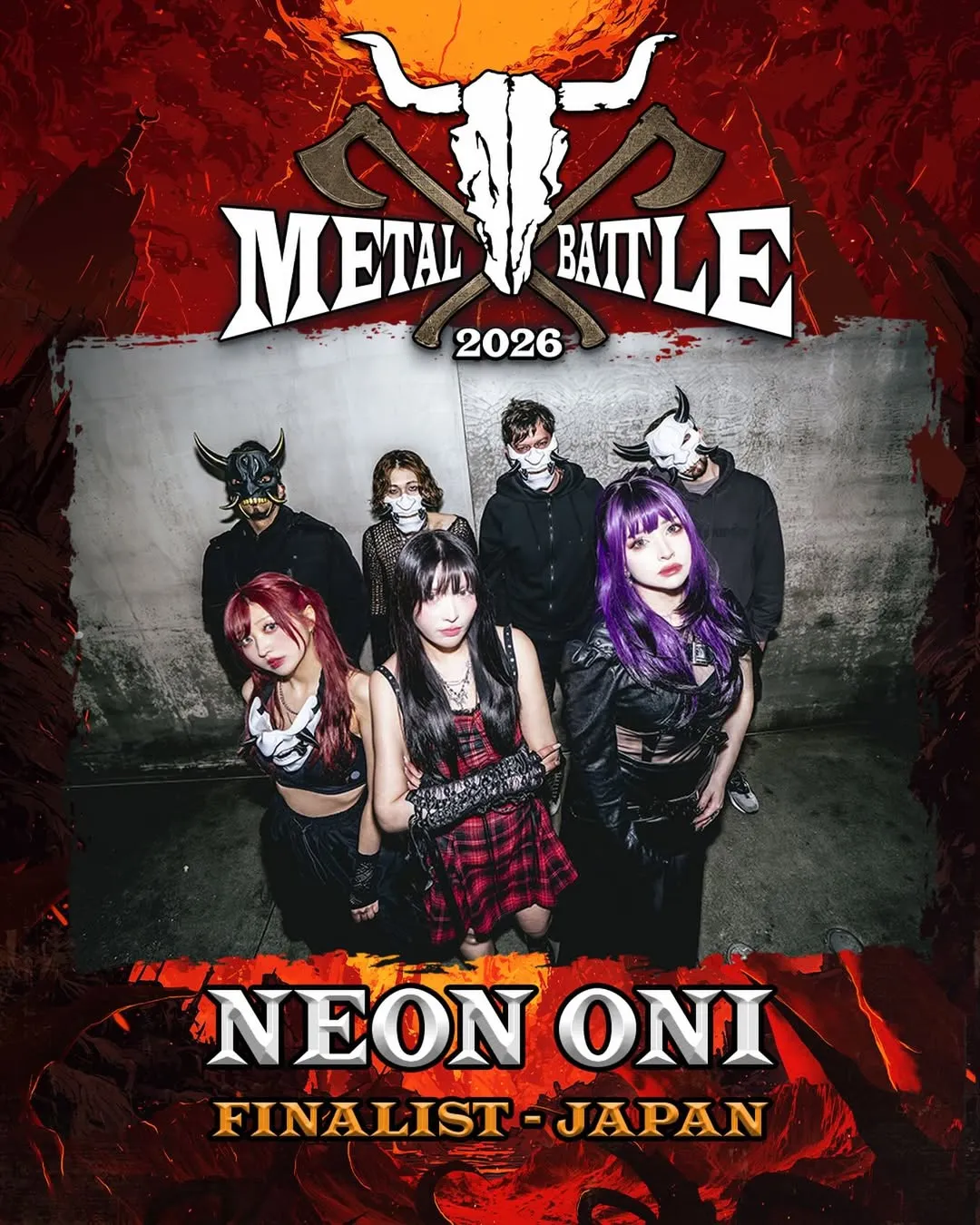
This effort extended beyond online platforms. They entered “Wacken Metal Battle Japan 2026,” the domestic qualifier for the global metal festival Wacken Open Air, and secured a spot among the five finalists.
This serves as a rare case of an AI-originated project being evaluated in an official live music contest setting.
(Source: Wacken Metal Battle Japan 2026)
Why the Lack of Backlash? The Success of AI Disclosure and Narrative
When AI generation is concealed, its discovery often provokes strong audience pushback. The reason NEON ONI maintained its support without losing its fanbase lies largely in how it communicated with its community.
The “Paradox of Transparency”: How Disclosure Builds Trust
A major factor was the project creators’ approach to AI disclosure. As suspicions spread, they updated their official Instagram profile to state: “Ura-kawaii metal band from the machine, made real for the fans.”
(Source: NEON ONI Official Instagram)
Instead of hiding their AI tools, they positioned the project’s digital origins as a core brand element. Establishing this transparency mitigated listener backlash and shifted the focus toward the novelty of the experiment. This demonstrates the “paradox of transparency,” where addressing facts early on ultimately strengthens trust.
IP Evolution as a Participatory Narrative
Another reason they retained community momentum was the narrative that the band became real because the fans requested it. Responding to demands for live shows and merchandise, they framed the transition from digital data to human performance as a direct result of audience feedback.
This structure effectively shifted the audience from passive consumers to co-creators driving the band’s real-world incarnation. To sustain an AI-based IP, providing space to incorporate fan input and evolve the project together is often more effective than simply delivering a finished product.
Next-Generation “AI × IP” Business Models for Enterprises and Agencies
The trajectory of NEON ONI extends beyond music news; it serves as a practical case study for corporate marketers and advertising agencies developing new IP and brand strategies.
Digital Testing and Real-World Monetization
Launching new characters or artists traditionally requires significant upfront investment in casting, music production, and asset creation. Generative AI allows teams to reduce these initial costs while conducting agile test marketing to gauge audience response.
The process begins by targeting the market with digital assets to identify which platforms yield the highest engagement. Once a baseline audience—such as steady listeners on Spotify—is established and demand is validated, investments can be made in hiring live performers, producing merchandise, and delivering offline experiences.
This “digital-to-real-world” funnel provides a structured business model for exploring commercial viability while mitigating financial risk.
Rebuilding Brand Safety and AI Guidelines
When enterprises adopt this approach, prioritizing brand safety is essential. While NEON ONI secured community understanding through profile disclosures, corporate accounts face severe reputational risks if consumers feel deceived.
Brands and agencies must establish clear operational guidelines specifying when to disclose AI usage, how to frame disclaimers to prevent backlash, and how to integrate that transparency into the broader customer journey. The challenge is no longer a binary choice of whether to hide AI, but rather how to disclose its use while reinforcing brand value.
Practical Guide for AI Creators: Building Sustainable, “NEON ONI-Style” IP
Establishing an original IP with real-world impact requires more than generating high-quality standalone content; it demands an approach designed for mid-to-long-term operation.
Building a Cohesive Creative Universe Using Suno AI and Image Generation
The first step in building original IP is maintaining consistent worldbuilding, or lore. When generating music via Suno AI and visual assets via tools like Midjourney, lacking visual and tonal consistency will hinder audience retention.
It is crucial to define the character backgrounds, visual aesthetics, and musical genres, managing prompts carefully to maintain consistency. Rather than stopping after a few releases, the project’s viability depends on a consistent content strategy that supplies content continuously across YouTube and social media, much like a traditional human artist.
Distribution and Audience-Growth Strategy
Once the creative universe is established, the focus shifts to capturing audience attention and building a community. Utilizing digital distribution services to officially release tracks on platforms like Spotify and Apple Music creates listener touchpoints through playlist placements.
It is equally important to monitor social media feedback and reaction videos, integrating fan sentiment into operational decisions. Providing the audience with a sense that they are being heard and mapping the path from online engagement to offline experiences (such as live events and merchandising) are strong prerequisites for turning the IP into a sustainable business.
Conclusion: AI Extends, Rather Than Replaces, Human Creativity
As AI technology advances, persistent concerns remain that it will displace human creators. This case study, however, offers a different perspective on that debate.
An AI-originated project secured tens of thousands of listeners, ultimately generating new live performance opportunities and employment for live musicians. Rather than simply replacing human expression, generative AI can function as a practical partner for developing new ideas and expanding real-world entertainment.
When evaluating your own IP design and production workflows, this case study serves as a useful reference for how co-creation between technology and human talent can yield viable business models.