
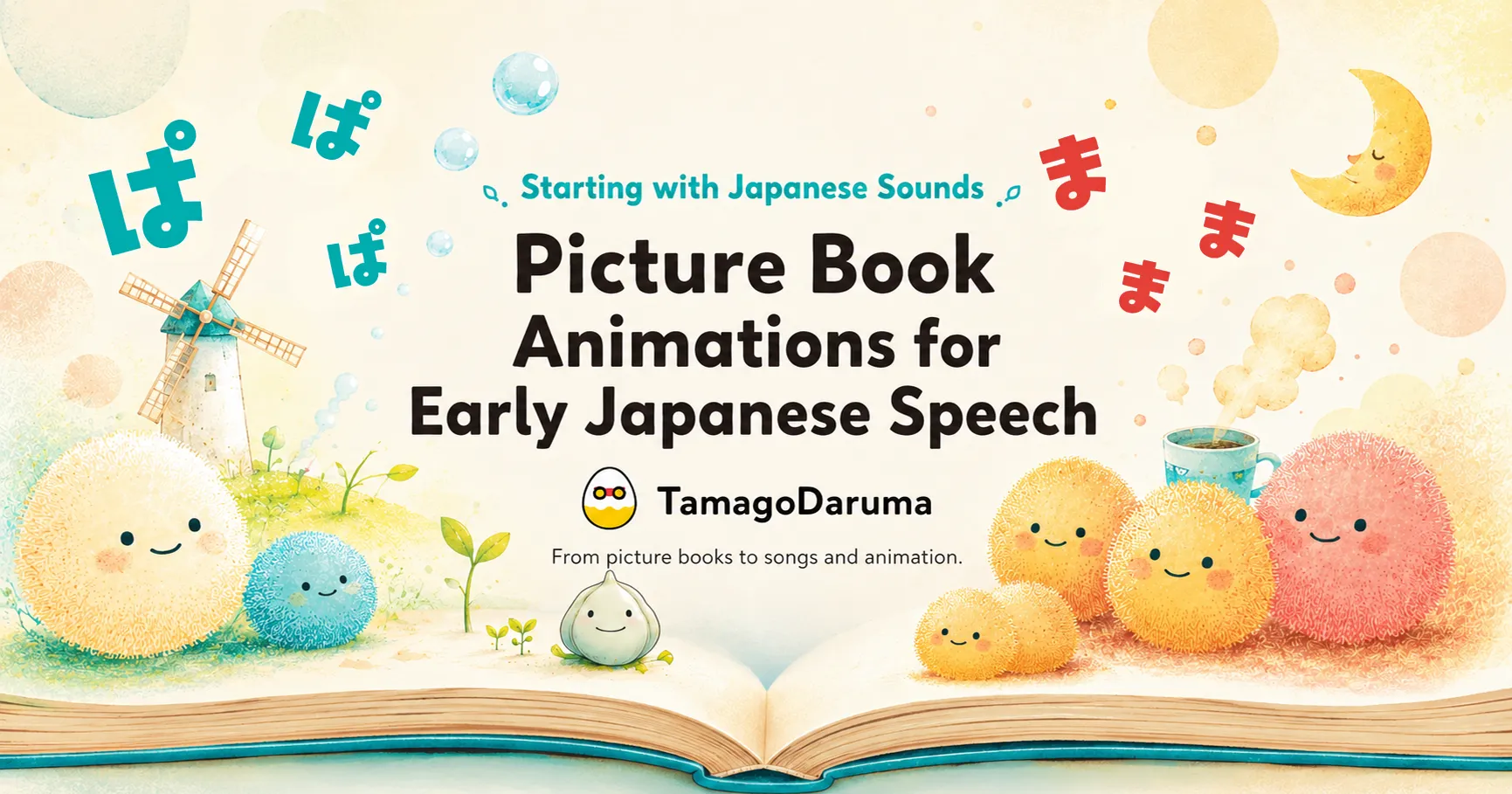
Picture Book Animation Series for Early Japanese Speech Now Available for Young Children and Families
AI Creators introduces a new picture book animation series designed to help babies and young children become familiar with the sounds of Japanese through parent-child interaction.
This original series begins with simple Japanese sounds such as “pa” and “ma,” which are easy for babies and toddlers to hear, imitate, and enjoy with their families. Each work is first structured as a complete picture book, then expanded with songs, music, and animation to create an experience that parents and children can watch, listen to, and speak along with together.
The series is designed as family-oriented content that helps babies and young children naturally encounter sound, rhythm, and the feel of words while enjoying communication with their parents or caregivers.
The series will continue to release new picture book animations for early Japanese speech, built around new sounds and themes.
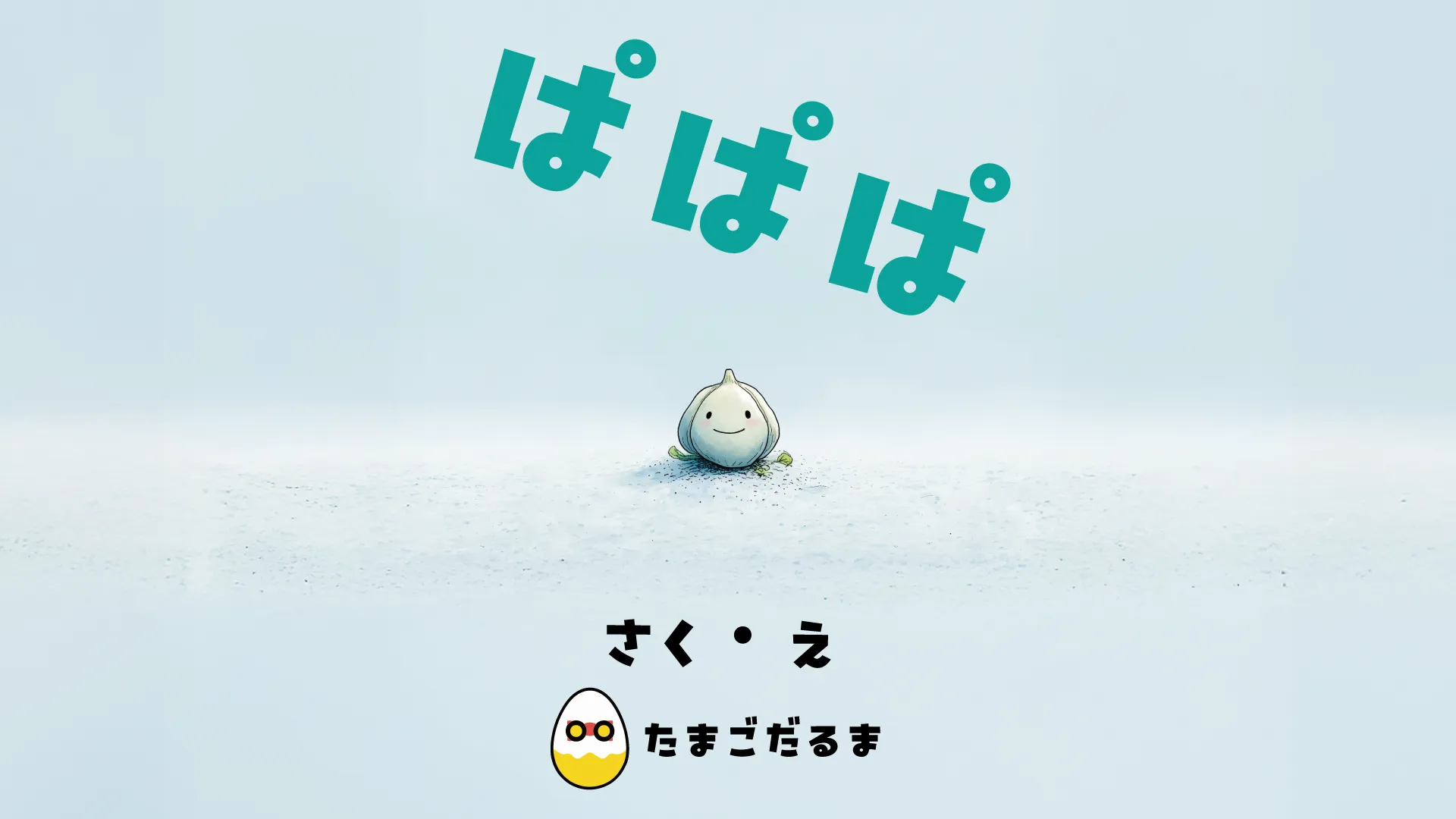 Papapa is an original picture book work that begins with the sound “pa” and depicts reassurance, discovery, and joy between parent and child. It is currently available as a read-aloud version, with a song-based picture book animation version planned for future development.
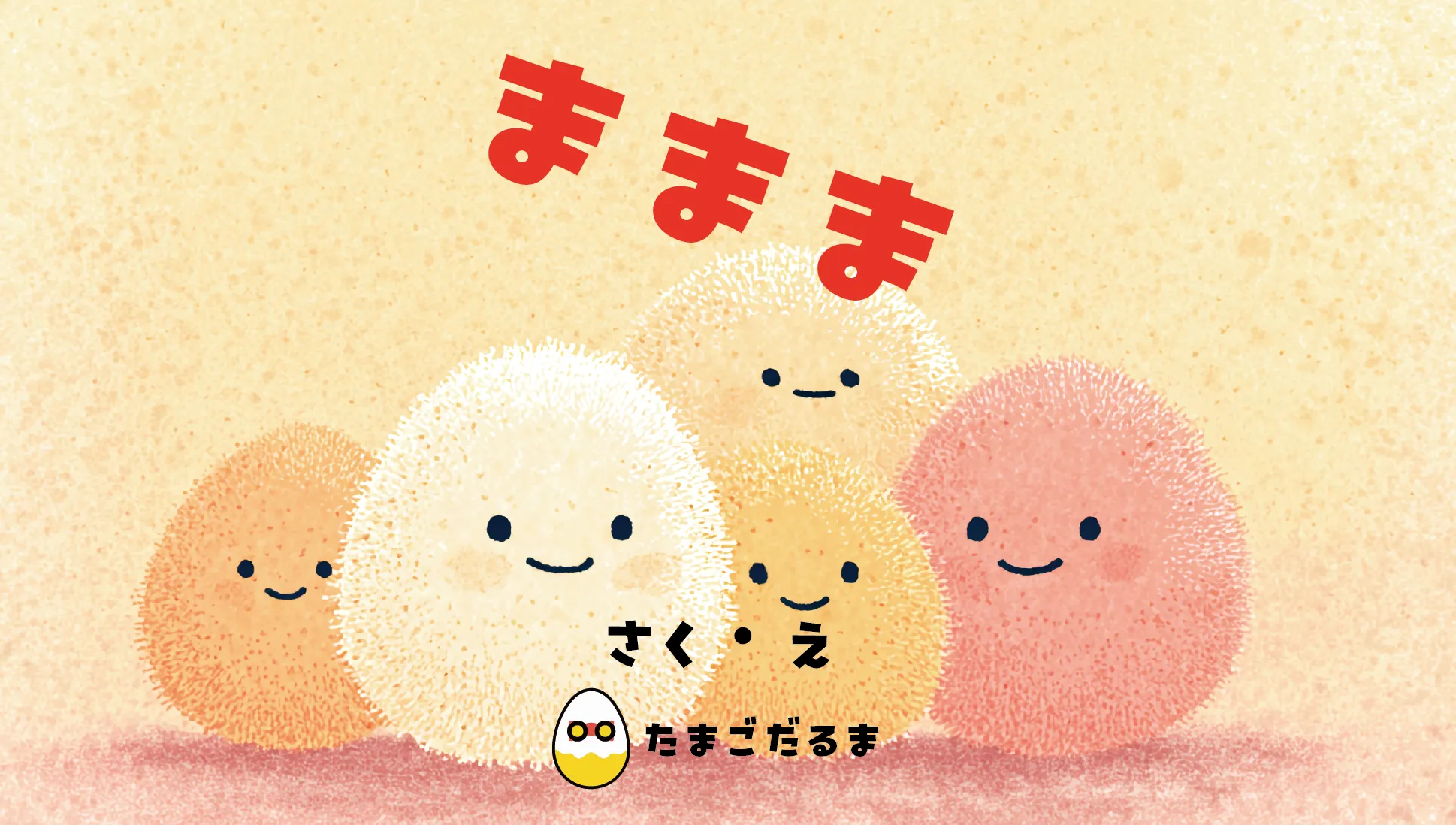 Mamama is a picture book work built around the soft sounds “ma,” “mama,” and “ma!” It portrays a parent and child’s day through song and animation, adding music and video expression to a story first created as a picture book.
Overview
This series is a parent-child picture book animation project that helps babies and young children become familiar with Japanese sounds such as “pa” and “ma.” Developed across picture books, songs, animation, and YouTube videos, the series is designed as family-oriented IP, with additional works planned for ongoing release. It also aims to share the charm of Japanese sounds with families in Japan and abroad, as well as with audiences interested in the Japanese language.Picture book animations for babies, young children, and families
The series begins with two works: Papapa and Mamama. Papapa begins with the Japanese sound “pa” and unfolds through images such as a small sprout, soap bubbles, birds, stars, and a windmill. Through the sound of “papa,” the story gently depicts a child’s sense of reassurance, discovery, and joy. Mamama is built around soft sounds such as “ma,” “mama,” and “ma!” — small sounds before they become full words. The work portrays a parent and child’s day through images of a mother’s hands, a hug, breakfast, wind, steam, and moonlight, expressed through song and animation. Both works combine short repeated sounds, picture book pacing, musical rhythm, and the visual appeal of animation. In addition to being enjoyed as read-aloud content, the series is designed so that parents and children can watch the videos together, speak the sounds aloud, and imitate the rhythm of the songs.The charm of Japanese sounds, beginning with “pa” and “ma”
A key feature of this series is its focus not only on the meaning of Japanese words, but also on the softness, rhythm, and playfulness of the sounds themselves. Short sounds such as “pa” and “ma” are familiar and approachable for babies and young children, and they are easy for parents and children to enjoy saying together. By combining these sounds with picture books, songs, and video, the series allows children to naturally experience the joy of sound and rhythm even before words are fully formed. Japanese sounds can also carry cultural appeal for families overseas and for people interested in the Japanese language. This series is intended not only for Japanese-speaking households, but also for international families, Japanese learners, and audiences interested in Japanese culture and family-oriented content. AI Creators positions this series as an AI creative project that connects AI picture book production, AI video production, family-oriented IP development, and the global communication of Japanese sounds and rhythms.Family-oriented IP across picture books, songs, and video
This series is not designed as video content alone. It is developed as family-oriented IP that moves across picture books, songs, animation, and YouTube videos. Families can enjoy the works slowly as picture books, or experience them as videos together with music and animation. This gives the series multiple points of contact: read-aloud time at home, parent-child communication, and moments when babies and young children can become familiar with sounds and words. As picture books, the works are structured with attention to page-by-page flow, repeated sounds, scene transitions, parent-child emotion, and the gentle afterglow that remains after reading. Songs and animation are then added to combine visual, auditory, and spoken experiences into one piece of content.Papapa|Original Picture Book Read-Aloud
Papapa is a read-aloud version built around the sound “pa,” depicting reassurance, discovery, and joy between parent and child. A song-based picture book animation version is also planned for future development.Mamama|Song-Based Picture Book Animation
Mamama is a picture book animation built around soft Japanese sounds such as “ma,” “mama,” and “ma!” It portrays a parent and child’s day through song and animation.A production process combining generative AI with human editing and direction
This project uses generative AI in parts of the planning, picture book structure, visual production, music, and animation process. At the same time, the project does not rely on automated generation alone. Human planning, editing, and direction are used to shape the sense of safety appropriate for babies, young children, and families; the rhythm between sound and image; the consistency of the characters and world; and the readability of each work as a picture book. To make the works function as picture book animations for early speech, it is not enough to simply generate images or videos. The production requires the integration of multiple elements, including sound selection, page structure, song tempo, the amount of visual information on screen, character expressions, and clarity when viewed by parents and children together.Created with reference to knowledge from childcare and early childhood fields
The series is created with attention to sounds that babies and young children can easily enjoy, gentle repetition, soft illustrations, and parent-child communication. The project is an original production initiative by the childcare, parenting, and family support media platform Tamago Daruma. In developing the series, knowledge from the childcare and early childhood fields is also taken into account. With cooperation from Tokyo Jidokyokai / ONE ROOF ALLIANCE, the project aims to create picture book animations that families can enjoy with confidence. This series does not guarantee medical, therapeutic, or developmental effects. It is offered as content that helps babies and young children become familiar with Japanese sounds and rhythms while enjoying speaking together with their parents or caregivers.Future development
Following Papapa and Mamama, additional picture book animations for early Japanese speech are planned for ongoing release. Future development may include YouTube video releases, picture books, song-based picture book animations, social media content, family-oriented content, and collaborations in the fields of childcare, education, and Japanese language learning. By sharing the joy of Japanese sounds through picture book animations for babies, young children, and families in Japan and abroad, the project aims to expand the possibilities of AI creative production for new forms of family-oriented content.Published works
Papapa
Mamama
Mamama is a picture book work built around the soft sounds “ma,” “mama,” and “ma!” It portrays a parent and child’s day through song and animation, adding music and video expression to a story first created as a picture book.
Related Links
Credits
- Project: Picture Book Animation Project for Early Japanese Speech
- Planning & Production: TamagoDaruma
- AI Creative: AI Creators
